
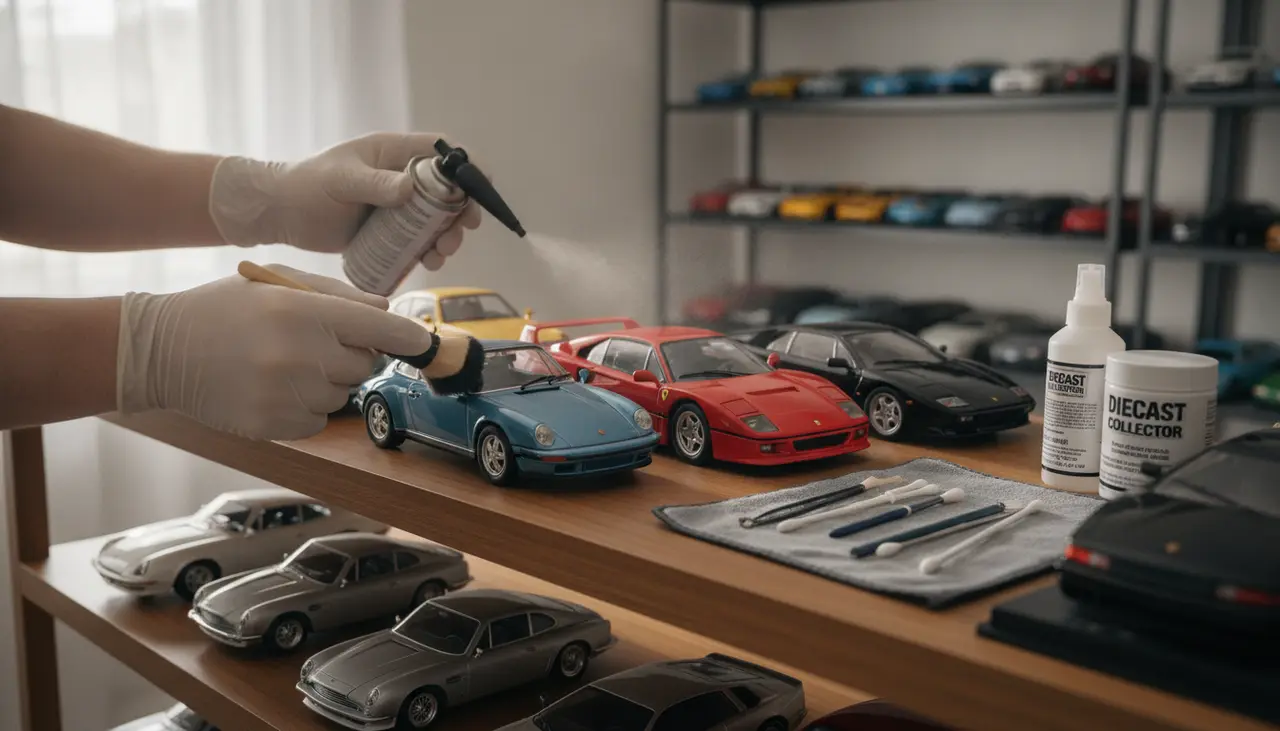
How to Clean and Dust Your Models Safely: The Ultimate Preservation Guide for Diecast Collectors
To clean diecast cars safely, the most effective method is using a soft-bristled synthetic makeup brush or a dedicated precision detailing brush to gently whisk away dust. For stubborn fingerprints on paintwork, a clean, dry, high-quality microfiber cloth is recommended. Avoid using water, household detergents, or compressed air canisters, as these can damage delicate tampography (decals), dislodge small photo-etched parts, or introduce moisture into internal crevices.
This guide is specifically designed for the serious automotive collector—someone who understands that a 1:18 scale Autoart or a 1:43 BBR model isn't just a "toy," but a precision-engineered investment. If you find yourself holding your breath every time you move a model to clean its shelf, this tutorial is for you.
The Collector’s Cleaning Toolkit
Before you touch your models, you need the right tools. Using the wrong cloth or a harsh chemical can lead to "spider-web" scratches in the clear coat or, worse, the loss of a hood ornament or side-view mirror.
| Tool Type | Best Use Case | Why It’s Recommended |
|---|---|---|
| Synthetic Makeup Brush | General dusting of bodies and interiors. | Ultra-soft bristles prevent scratching and reach into tight gaps. |
| Microfiber Cloth (300+ GSM) | Removing oils and fingerprints from flat surfaces. | Picks up oils without the need for liquid cleaners. |
| Precision Cotton Swabs | Cleaning wheels, exhausts, and door shuts. | Allows for targeted pressure in recessed areas. |
| Silicone-Free Wax | Long-term paint protection (Diecast only). | Prevents oxidation of the zinc alloy under the paint. |
| Handheld Air Blower | Removing loose dust from engine bays. | Manual bulbs (like those for cameras) provide controlled air without moisture. |
Step-by-Step: How to Clean Diecast Cars Without Damage
Cleaning a high-end replica is a meditative process. It requires patience and a "less is more" approach. If you are just starting your journey, you might want to review our guide on Choosing Your First 1:18 Scale Model: A Beginner’s Guide to Premium Diecast to understand the materials you are working with.
1. The Dry Dusting Phase
Start from the top of the model and work your way down. Use your soft brush to gently sweep dust off the roof, hood, and trunk. Use very light strokes around delicate areas like wipers, antennas, and mirrors. If the model has opening parts, open them carefully to brush out the door sills and engine bay.
2. Addressing Fingerprints
Oils from your skin can actually be acidic, which may damage paint over decades. If you see a smudge, use a clean section of a microfiber cloth. Do not "scrub." Instead, use a light circular motion. If the smudge is stubborn, a tiny amount of breath (moisture) is usually enough to help the cloth lift the oil.
3. Detailing the "Hard to Reach" Spots
For wheels and intricate grilles, use a pointed cotton swab. This is especially important for models from manufacturers like CMC or Kyosho, where wire wheels or mesh grilles are common. Be careful not to snag the cotton fibers on photo-etched metal parts.
4. The Final Inspection
Hold the model under a bright, neutral light source. Check for any remaining dust or lint left behind by your cleaning tools. Once satisfied, return the model to its display.
Resin vs. Diecast: Does Material Matter?
The cleaning approach varies slightly depending on whether your model is made of Zinc Alloy (Diecast) or Resin Casting.
- Diecast (Autoart, Minichamps): These models are generally more robust. The paint is often baked on, making it slightly more resistant to light polishing. However, be wary of "zinc pest"—ensure the model is completely dry before storing.
- Resin (BBR, MR Models, Spark): Resin models are often sealed (no opening parts) and use thinner paint layers or even different types of clear coats. They are more brittle. Never use any chemical polishes on resin unless the manufacturer specifically approves it.
For a deeper look at the differences in manufacturing quality, refer to The Diecast Collector Pro Master Buying Guide: Precision, Quality, and Value.
Common Beginner Mistakes to Avoid
- Using Canned Compressed Air: The "propellant" in these cans can come out as a freezing liquid, which can thermally shock the paint or blow off small, glued-on parts.
- Touching with Bare Hands: Always try to wear lint-free cotton or nitrile gloves when handling your models for cleaning. This prevents new oils from being deposited.
- Household Glass Cleaners: Ammonia-based cleaners (like Windex) can strip the wax or damage the tampography/decals on the model.
- Direct Sunlight Post-Cleaning: Never leave a model in direct sunlight to "dry" or be displayed. UV rays are the number one enemy of paint and interior plastics.
Frequently Asked Questions
How often should I clean my diecast cars? If they are in a high-quality acrylic display case, once every 6–12 months is usually sufficient. If they are on open shelves, a light dusting once a month is necessary to prevent dust from "bonding" to the paint.
Can I use water to wash my models? It is generally discouraged. Water can get trapped in hinges or under decals, leading to rust (in diecast) or bubbling. If a model is extremely dirty (e.g., a "barn find" from an attic), use a damp—not wet—cloth and dry it immediately.
What is the best way to clean the windows? Use a dedicated eyeglass cleaning cloth. These are designed for delicate plastics and coatings and will not leave scratches on the "glass" (which is usually acrylic or acetate).
Affiliate Disclosure: This post contains affiliate links to recommended cleaning kits and microfiber tools. If you purchase through these links, we may earn a small commission at no extra cost to you, which helps us continue providing high-quality collector resources.