
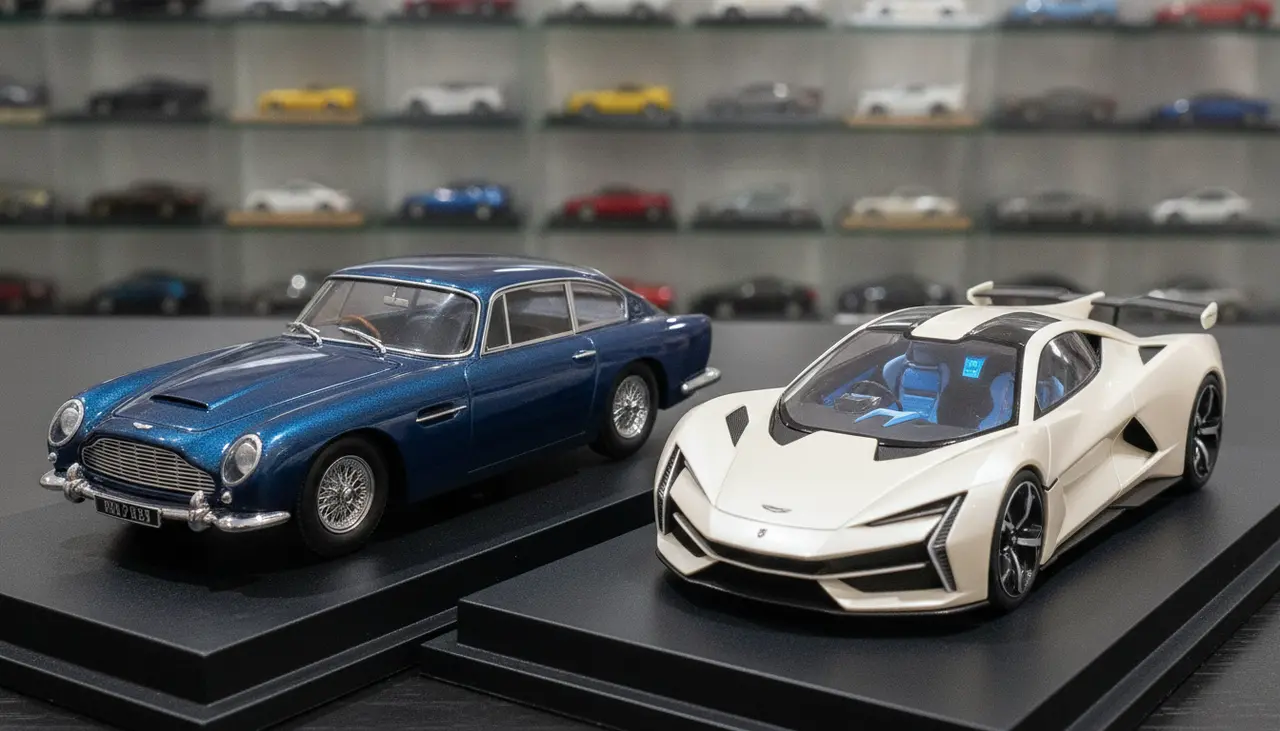
Diecast vs. Resin Models: The Collector’s Guide to Choosing Your Next Masterpiece
Disclosure: This post contains affiliate links. If you click through and make a purchase, we may earn a commission at no additional cost to you, helping us continue to provide high-quality collecting resources.
In the world of high-end automotive replicas, the debate between diecast vs resin models is more than just a matter of material. It’s a choice of philosophy. Do you value the mechanical satisfaction of opening a hood to see a wired engine bay, or do you prioritize the razor-sharp body lines and exclusive rarity that only resin can provide?
If you’ve ever found yourself staring at a stunning 1:18 scale Ferrari, wondering why one version costs $150 and has opening doors while another costs $400 and is completely sealed, you aren't alone. As collectors, our time and shelf space are limited, and making the right investment requires understanding what’s happening beneath the paint.
The Short Answer: Diecast vs. Resin
The primary difference between diecast and resin models lies in the manufacturing process and functionality. Diecast models are made from a zinc alloy (Zamac) injected into steel molds, typically featuring opening parts and a heavier feel. Resin models are cast from liquid polyurethane in silicone molds; they are almost always "sealed" (no opening parts) but offer superior surface detail, sharper shut-lines, and are produced in much smaller, limited-edition quantities.
Who This Guide Is For
Whether you are a seasoned veteran looking to branch into high-end brands like BBR or MR Models, or a newcomer trying to understand why some "plastic-feeling" cars cost more than metal ones, this guide is for you. We will focus on the technical nuances of 1:18 and 1:43 scales, helping you balance your budget with your desire for precision.
Comparison at a Glance: Diecast vs. Resin
| Feature | Diecast (Zinc Alloy) | Resin (Polyurethane) |
|---|---|---|
| Material | Metal (Zamac) | Liquid Resin |
| Opening Parts | Usually (Doors, Hood, Trunk) | Rarely (Usually Sealed) |
| Weight | Heavy, substantial feel | Lighter, delicate |
| Detail Sharpness | High (limited by metal thickness) | Exceptional (wafer-thin edges) |
| Production Volume | High (Thousands) | Low (Dozens to Hundreds) |
| Durability | High (Resistant to drops) | Fragile (Prone to snapping) |
| Price Point | $50 - $300+ | $150 - $600+ |
The Case for Diecast: The Traditional Choice
Diecast has been the gold standard for decades. Brands like Autoart, Kyosho, and Minichamps have perfected the art of the "opening" model.
Why collectors love it:
- Tactile Interaction: There is a unique joy in using a small tool to open a door and admire the flocked carpeting or the tiny seatbelt buckles.
- Mechanical Detail: Because the hoods open, manufacturers invest heavily in engine replicates. You’ll often see individual spark plug wires and realistic fluid reservoirs.
- Longevity: While "zinc pest" (a rare chemical degradation) was an issue in the past, modern alloys are incredibly stable.
If you are looking for a balance of mechanical detail and value, you might want to read our look at Shelby Collectibles 1:18 Ford Mustang Shelby GT500: Redefining Value in Opening Diecast.
The Case for Resin: The Boutique Choice
Resin models are often the only way to acquire niche or modern hypercars. Because silicone molds are cheaper to produce than steel diecast molds, manufacturers like Spark, GT Spirit, and BBR can afford to make just 50 or 100 units of a specific car.
Why collectors love it:
- Proportional Accuracy: Resin doesn't require the same "wall thickness" as metal. This allows for incredibly thin pillars and realistic window transparency.
- Paint Finish: Resin takes paint differently, often resulting in a deeper, more "wet-look" finish that mimics real automotive clear coats.
- Exclusivity: Owning a resin model often means owning a piece of a very limited run, which can help maintain or increase resale value over time.
Which Material Is Best For Your Collection?
Best for "The Hands-On Collector"
If you like to occasionally "play" with your models—opening the doors to show friends the interior or posing the front wheels—Diecast is your winner. The weight gives it a premium feel that many enthusiasts find essential. For a deeper dive into choosing quality across all materials, check out The Diecast Collector Pro Master Buying Guide: Precision, Quality, and Value.
Best for "The Aesthetic Purist"
If your models live behind glass and are never touched, Resin offers a level of visual "pop" that diecast struggles to match. The shut-lines (the gaps between body panels) are scaled accurately, whereas diecast gaps can sometimes look "toylike" because the metal is too thick.
Best for Niche Racing History
If you collect specific Le Mans or F1 grids, you will inevitably end up with resin. Manufacturers like Spark use resin to fill the gaps in racing history that would be too expensive to produce in diecast.
Common Beginner Mistakes to Avoid
- Forcing Resin Parts: A common tragedy is a new collector trying to "pop" the hood of a resin model, only to snap the casting. If it doesn't have visible hinges, do not force it.
- Ignoring Sunlight: Both materials suffer from UV exposure, but resin can occasionally warp under extreme heat, and the decals used on high-end resin models are prone to yellowing if left in direct sun.
- The "Weight" Bias: Don't assume a lighter resin model is "cheap." In many cases, the lighter resin model has ten times the man-hours in hand-finishing compared to a heavy diecast model.
- Touching the Paint: The oils in your skin can react with the delicate tampography and clear coats over time. Always use microfiber gloves when handling high-end pieces.
To ensure your investment stays in showroom condition, we highly recommend reading our Display Case Buyer's Guide: Protecting Your Investment.
FAQ: Diecast vs. Resin
Q: Do resin models last as long as diecast? A: Yes, if stored properly. Early resin models from 20 years ago sometimes had shrinkage issues, but modern high-quality resin is very stable.
Q: Why are resin models usually sealed? A: Resin is more brittle than zinc alloy. Creating functional hinges in resin is technically difficult and prone to breaking, so most manufacturers stick to a "sealed" body to maintain structural integrity.
Q: Which has better resale value? A: It depends on the subject matter. Limited edition resin models (like those from BBR) often appreciate because of their low production numbers. However, iconic diecast models from discontinued lines (like certain Autoart Millennium pieces) also command high prices.
Final Thoughts
Whether you choose the heavy, functional charm of a diecast metal replica or the sleek, razor-sharp accuracy of a resin masterpiece, the goal is the same: preserving automotive history in miniature. Start with what moves you emotionally—after all, a collection is a reflection of your own passion for the road.